Market Overview and Outlook
In recent years, the refined naphthalene market has shown steady growth. In 2024, the global market size reached approximately USD 1.68 billion and is expected to grow to USD 2.2 billion by 2030, representing a compound annual growth rate (CAGR) of 3.5%.
China's refined naphthalene market is projected to grow from RMB 12 billion in 2025 to RMB 16.5 billion in 2030, with a CAGR of 6.5%, significantly higher than the global average.
In 2025, China's demand for refined naphthalene is estimated at 678,000 tons (accounting for 42.3% of global demand), and is expected to increase to 898,000 tons by 2030 (47.8% of global demand), driven by rising demand for high-purity and energy-efficient downstream products.
Source of data: https://www.renrendoc.com/paper/426423496.html
《2025–2030 China Refined Naphthalene Industry Supply Forecast and Outlook Report on Market Trends and Prospects》
Downstream Application Fields
As an important organic chemical raw material, refined naphthalene has a wide range of downstream applications with distinct characteristics across segmented markets. It is used in various industries including chemicals, dyes, pharmaceuticals, pesticides, construction, textiles, electronics, and new energy. Its derivatives serve as key intermediates or functional materials in these fields.

Pain Points and Bottlenecks of Traditional Production Processes
Traditional processes for refined naphthalene (RN) production face multiple challenges in practical application. These pain points and technical bottlenecks are mainly reflected in the following aspects:
Energy efficiency
Separation and purification effectiveness
Process design limitations
Equipment performance
Environmental compliance costs
These factors significantly constrain both production efficiency and product quality improvements.
In particular, energy consumption is a critical issue. Traditional separation technologies such as distillation are extremely energy-intensive, accounting for approximately 60% of total energy use in chemical production. The root causes lie in outdated energy-saving technologies and low equipment efficiency.
This problem becomes even more pronounced in the production of high-purity chemical products, where each incremental increase in purity level leads to:
A sharp increase in theoretical plate numbers of distillation columns
A geometric rise in energy consumption
A decline in separation factors as purity increases
Together, these factors result in exponentially higher energy demands, making traditional processes unsustainable for producing ultra-high-purity materials.
DODGEN Refined Naphthalene Purification Technology Solution
1. Process Route
DODGEN has developed a large-scale refined naphthalene melt crystallization process, utilizing an internationally advanced "4+2 stage dynamic melt crystallization" technology. This multi-stage segmented purification approach enables the efficient upgrading of industrial naphthalene to high-purity levels.
The process is based on the solid-liquid equilibrium principle of the naphthalene-indene system, and uses ≥95% crude naphthalene as the feedstock. The core purification is achieved through a cyclic three-stage operation: crystallization – sweating – melting.
Crystallization Stage: The melt forms a crystal layer on the inner wall of a melt crystallizer. The coolant precisely controls the temperature, enabling the controlled precipitation of crystals.
Sweating Stage: The temperature is gradually raised to expel interstitial impurities trapped between crystal layers.
Melting Stage: The purified crystal layer is melted and collected as high-purity liquid naphthalene.
The system is further complemented by two-stage static crystallizers, which are used to recover remaining naphthalene components from residual liquids, ensuring an overall product recovery rate of up to 91%.
2. Process Advantages
Ultra-High Purity and Yield
The product purity exceeds 99.5%, with impurity content (e.g., methylnaphthalene) ≤ 0.5%, significantly higher than industry standards.
The dual-stage static mother liquor recovery system increases the overall yield to 91%, effectively reducing raw material losses.
High-Efficiency, Energy-Saving Design
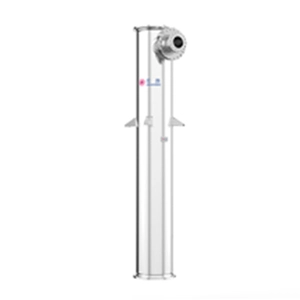
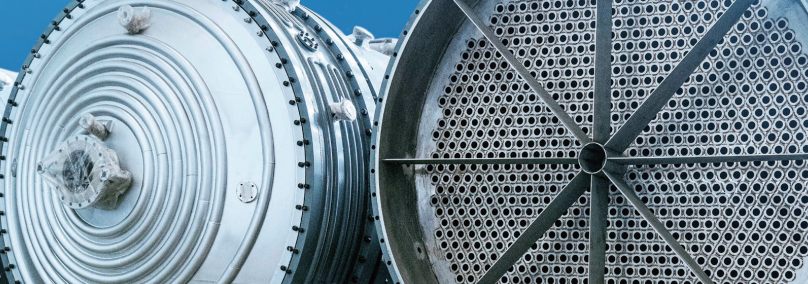
The falling-film melt crystallizer adopts shell-side falling film heat transfer with hot and cold media circulation.
It features low liquid holdup and high heat transfer efficiency, completing each batch in just 2–3 hours.
Compared to traditional processes, it reduces energy consumption by 30%, with lower steam and cooling water usage.
Stable and Scalable
No scale-up effect: Process data from single-tube pilot trials can be directly scaled up to industrial production.
Dynamic + static crystallization integration adapts to raw material fluctuations and ensures stable continuous operation.
Typical Project Overview: DODGEN 30,000 t/a Refined Naphthalene Plan
Product purity improved from 95% to 99.5%
Annual energy savings of nearly 10,000 tons of standard coal
Carbon emissions reduced by approximately 25,000 tons per year
In addition, DODGEN has achieved multiple large-scale refined naphthalene projects globally, helping international clients expand their purification capacity with comprehensive professional solutions across the entire project lifecycle.